Conceptual Project
Closing the Loop Between Digital Booking and Physical Care
How I designed a patient app and admin dashboard that cut hospital delays from 45 minutes to 10 minutes.
MY ROLE
Sole UX Designer
TOOLS USED
Figma, User Research, Prototyping
PROJECTED IMPACT:
>75% faster check-ins via mobile booking to front desk connection
- >75% reduction in patient check-in time (~45 min → 10 min)
- 100% record accuracy through digital patient IDs
- 40% decrease in no-shows via flexible payment options
- 2x app engagement by transforming static records into health dashboards
THE PROBLEM:
Appointment bookings and check-ins are slow, taking up 45 minutes
Healthcare operates on analog processes while patients expect digital experiences. This creates a critical breakdown:
For Patients:
- Redundant paperwork at every visit despite online booking.
- 45+ minute waits for file retrieval.
- Payment verification failures causing delays.
- Zero visibility into queue status
For Staff:
- 80% of time spent on repetitive questions
- No system integration between booking and front desk
- Manual reconciliation of payments
- Physical file management bottlenecks
Business Impact: Revenue loss from no-shows, operational inefficiency, poor patient satisfaction
CONTRIBUTION:
I designed for both sides of the desk, not just patients
I designed a connected two-sided ecosystem rather than a patient-only app, recognizing that solving friction requires addressing both ends of the interaction.
Designing for the Realities of Healthcare: A User-Centered Approach
In healthcare, the best solutions are those that deeply understand and address the unique challenges of the environment. My design process for HosQare was grounded in real-world insights gathered from patients, healthcare workers, and hospital administrators. This user-centered approach ensured that every feature was not just innovative but also practical and effective in improving the hospital experience for all stakeholders.
Research & Key Insights:
The failure wasn't people, but process design trying to push digital patients through analog systems. This was more evident after I:
- Conducted user interviews with patients and front-desk staff
- Identified dual persona needs: anxious patients + overwhelmed receptionists
- Validated findings through social listening across Nigerian healthcare forums
- Mapped service gaps between digital booking and physical check-in

Designing to Overcome Operational Bottlenecks
I focused on three broad areas of opportunity that would create the most impact for patients and staff, while also being feasible to implement within the constraints of the healthcare environment.
IMPROVE TURN AROUND TIME FOR ALL PATIENT ACTIVITIES
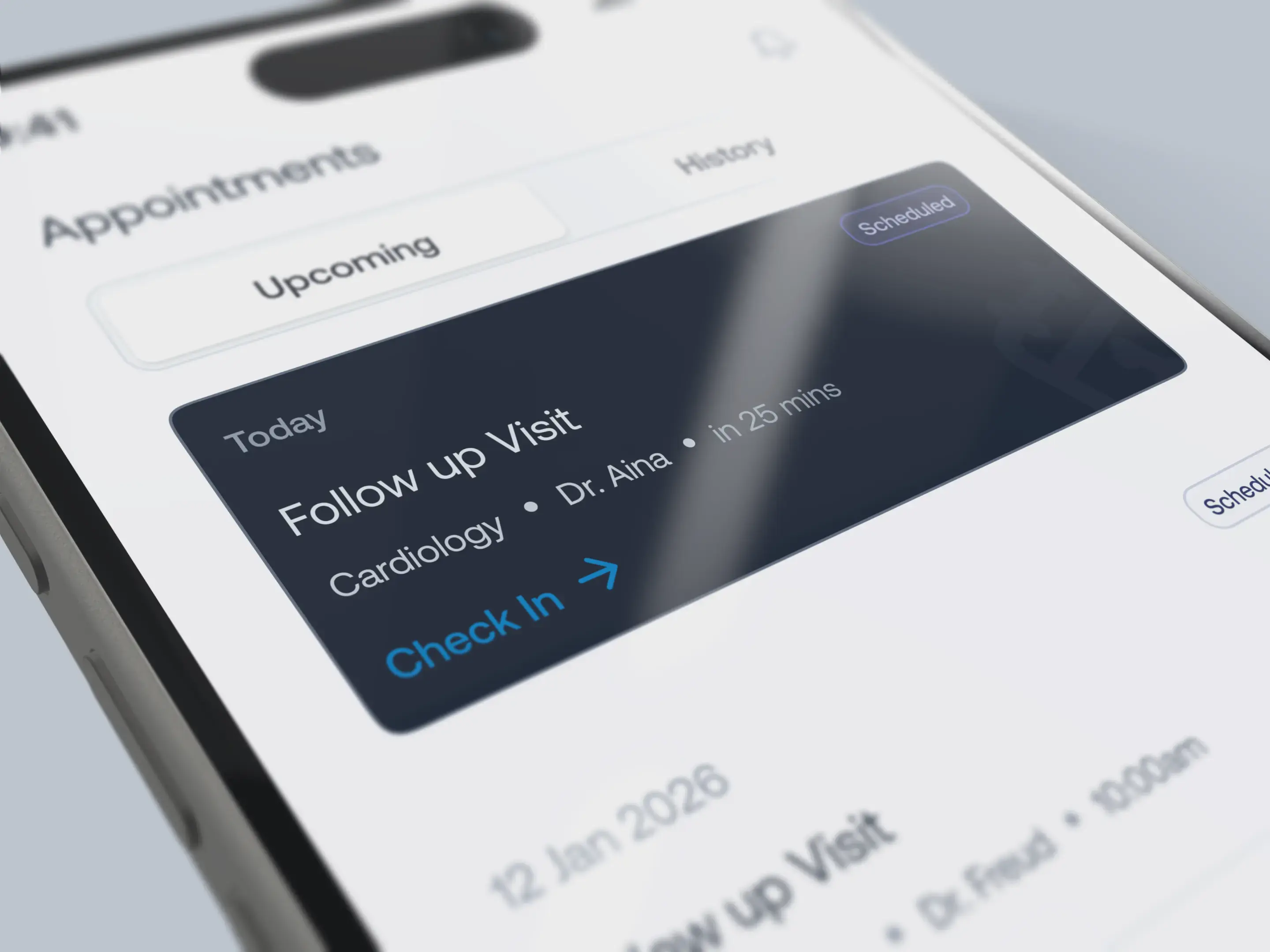
A mobile application to resolve identified pain points relating to the processes involved in the patient's hospital visit.
REDUCE OPERATIONAL INEFFICIENCIES AT THE FRONT DESK
A dashboard page dedicated to efficiently managing arriving patients at the front desk, reducing queues and customer complaints.
PATIENT ADOPTION
A landing page to market the application to new and exisiting patients
A Dual-Sided Platform That Syncs Digital Patients with Analog Hospitals
PILLAR I
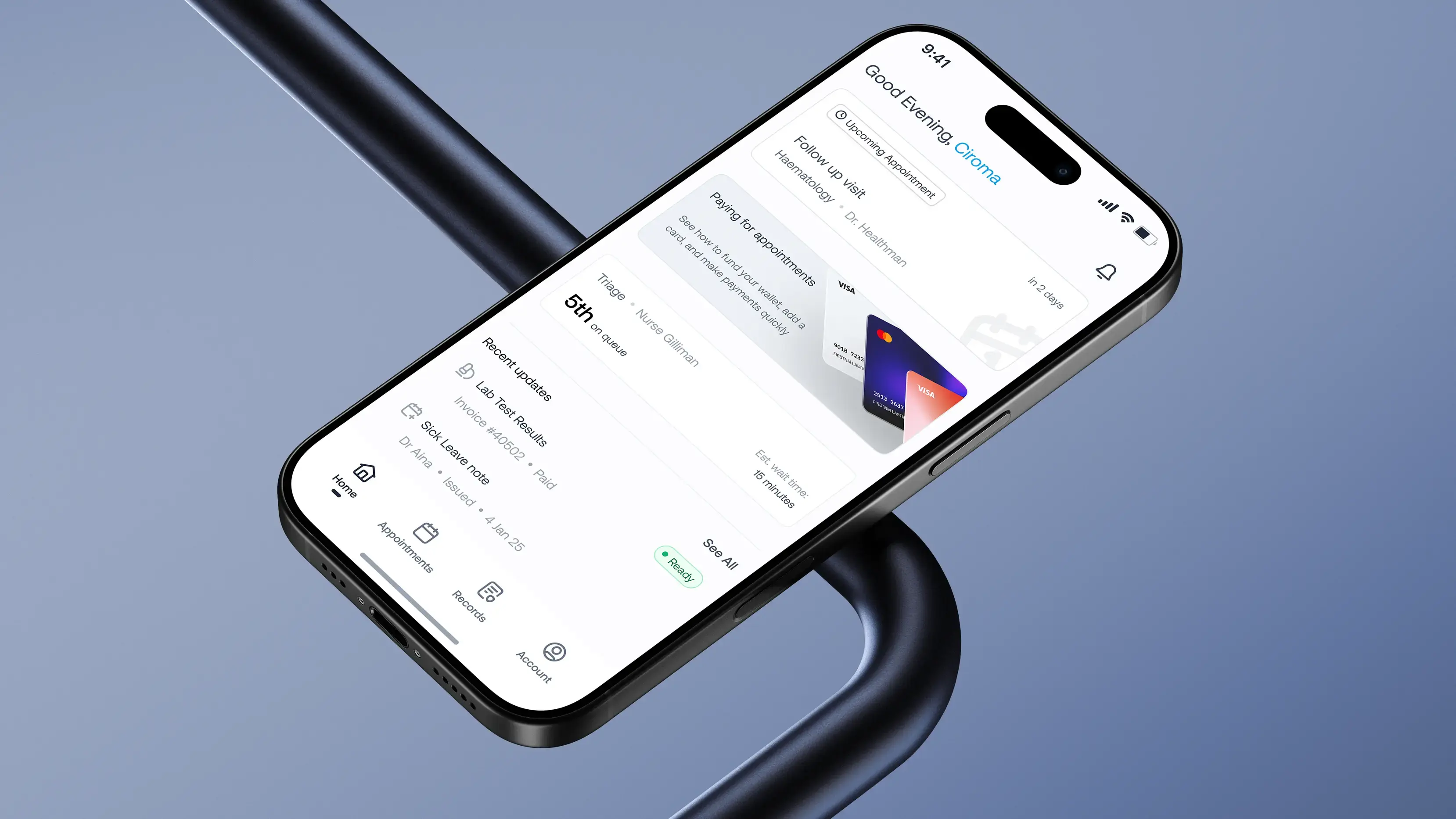
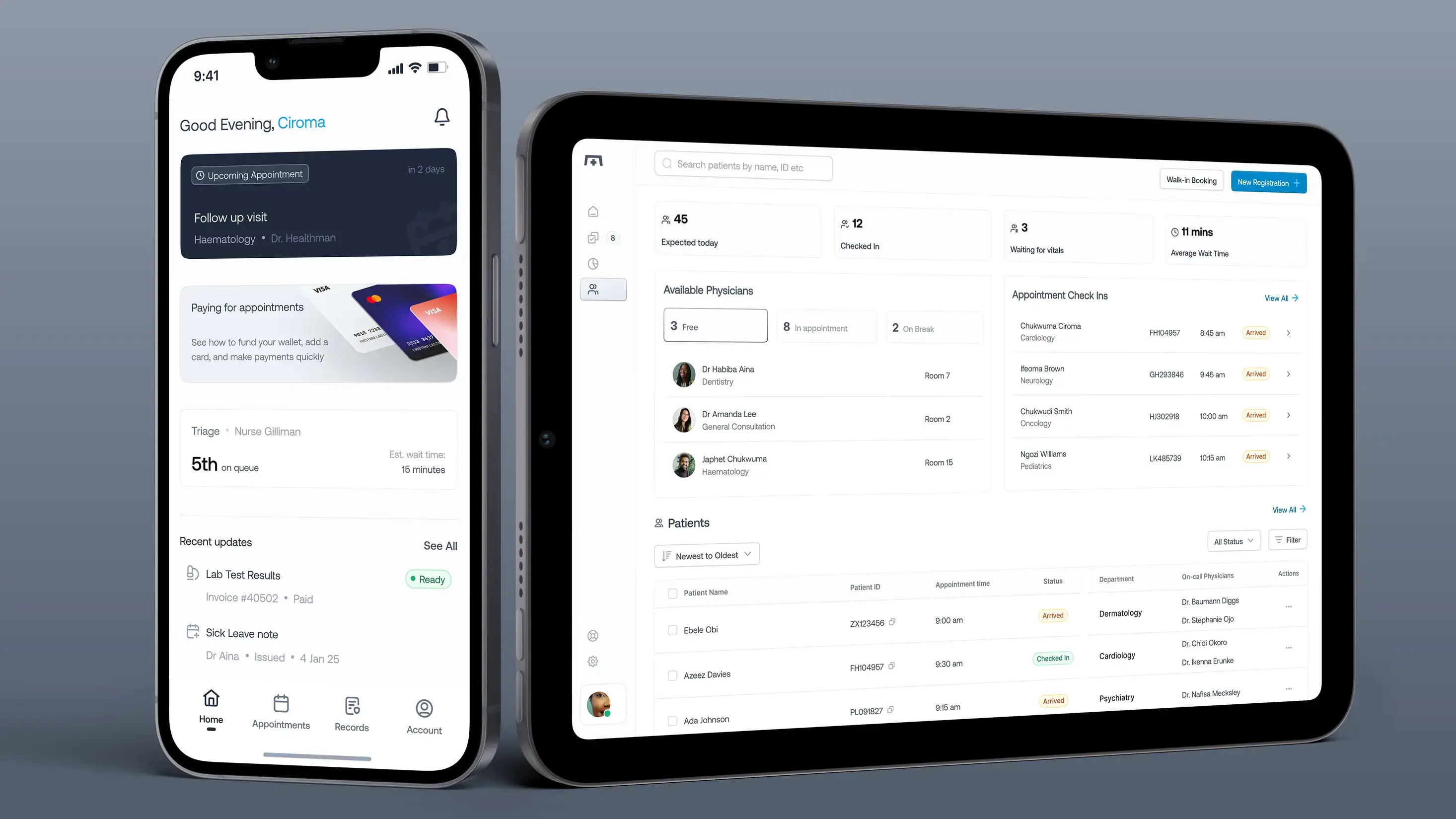
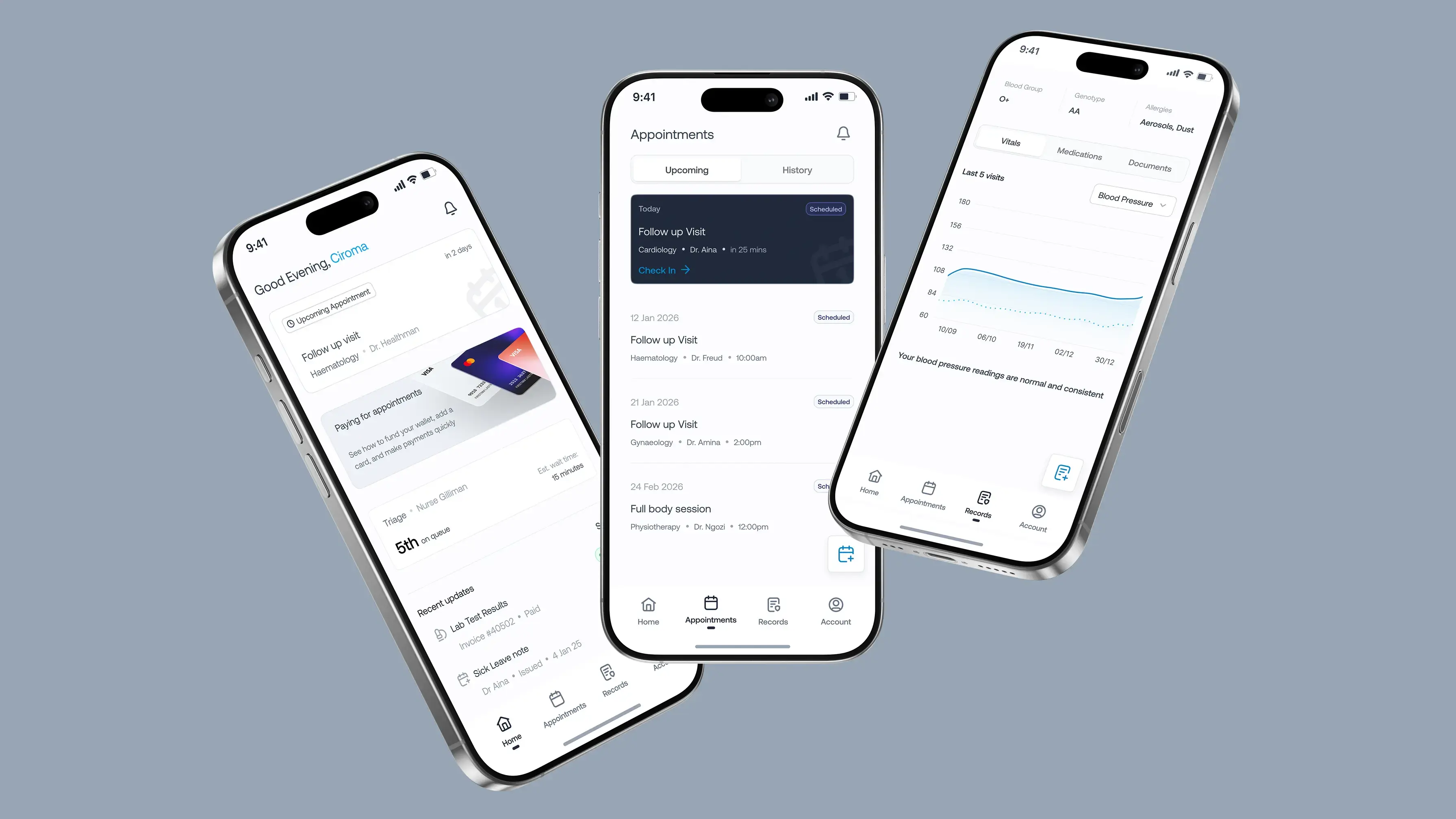
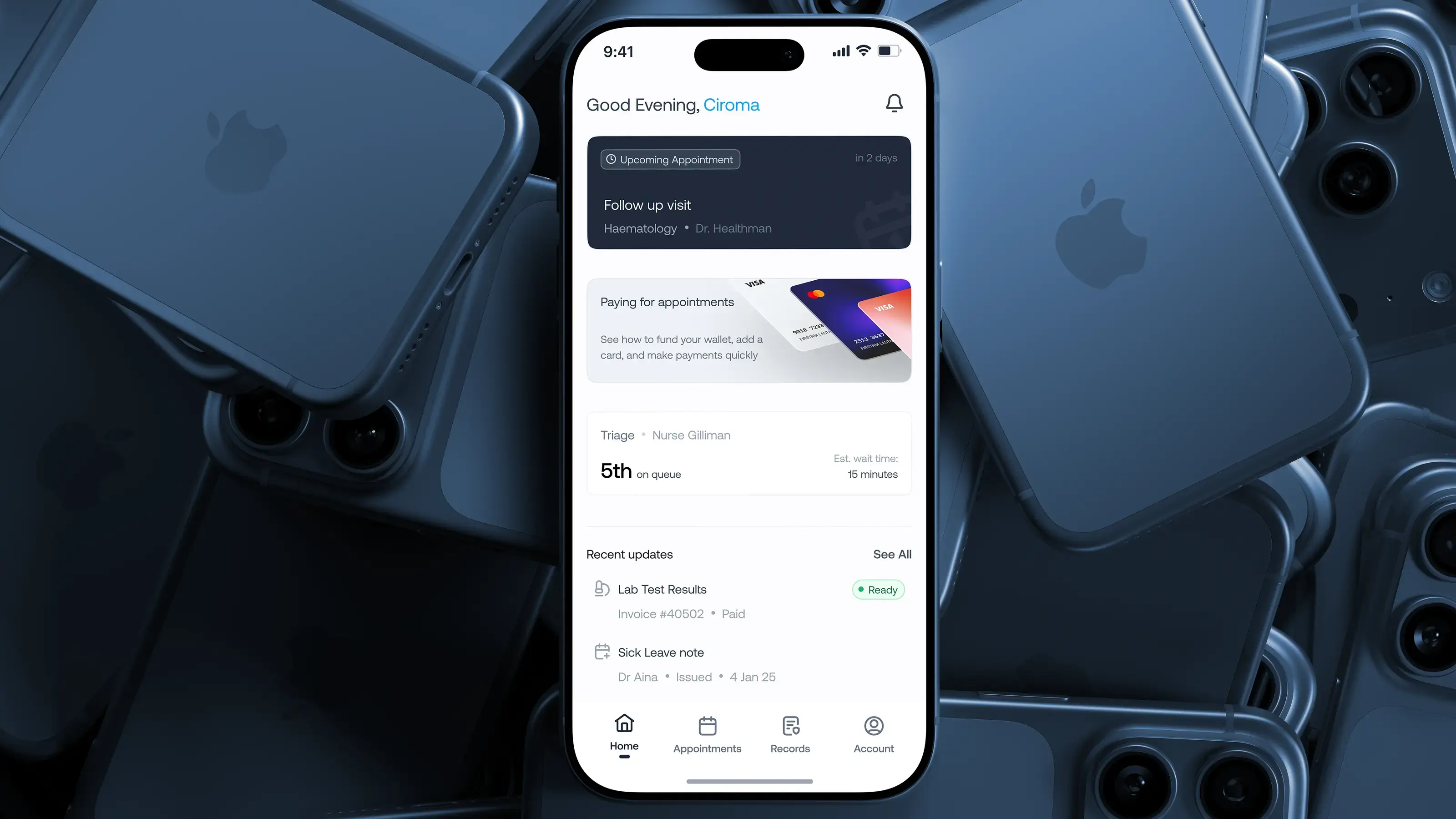
Patient app that moves check-in, payments, and records to the phone — before arrival
ONE-TIME PROFILE SETUP REPLACES PAPER FORMS AT EVERY CLINIC VISIT
- Pre-visit capture of bio-data, Next of Kin, HMO verification
- Hospital receives complete patient data before arrival
- Design decision: Front-loaded complexity to back-load speed; users tolerate setup friction when it saves time later
"BOOK NOW, PAY LATER" TO INCREASE BOOKINGS WHILE PROTECTING HOSPITAL REVENUE
- Flexible payment removed booking friction
- "Fast Pass" prepayment option for users who want to skip queues
- In-app wallet with bank-grade encryption
- Business logic: Converted tentative bookers while still securing commitments
LOCATION-TRIGGERED CHECK-IN ELIMINATED FRONT-DESK QUEUES
- Geofenced "Check In" button activates workflow only at hospital location
- Instant notification to admin dashboard upon arrival
- Digital pass replaces verbal confirmation
- Technical constraint: Pivoted from background tracking to user-initiated flow due to iOS/Android privacy restrictions
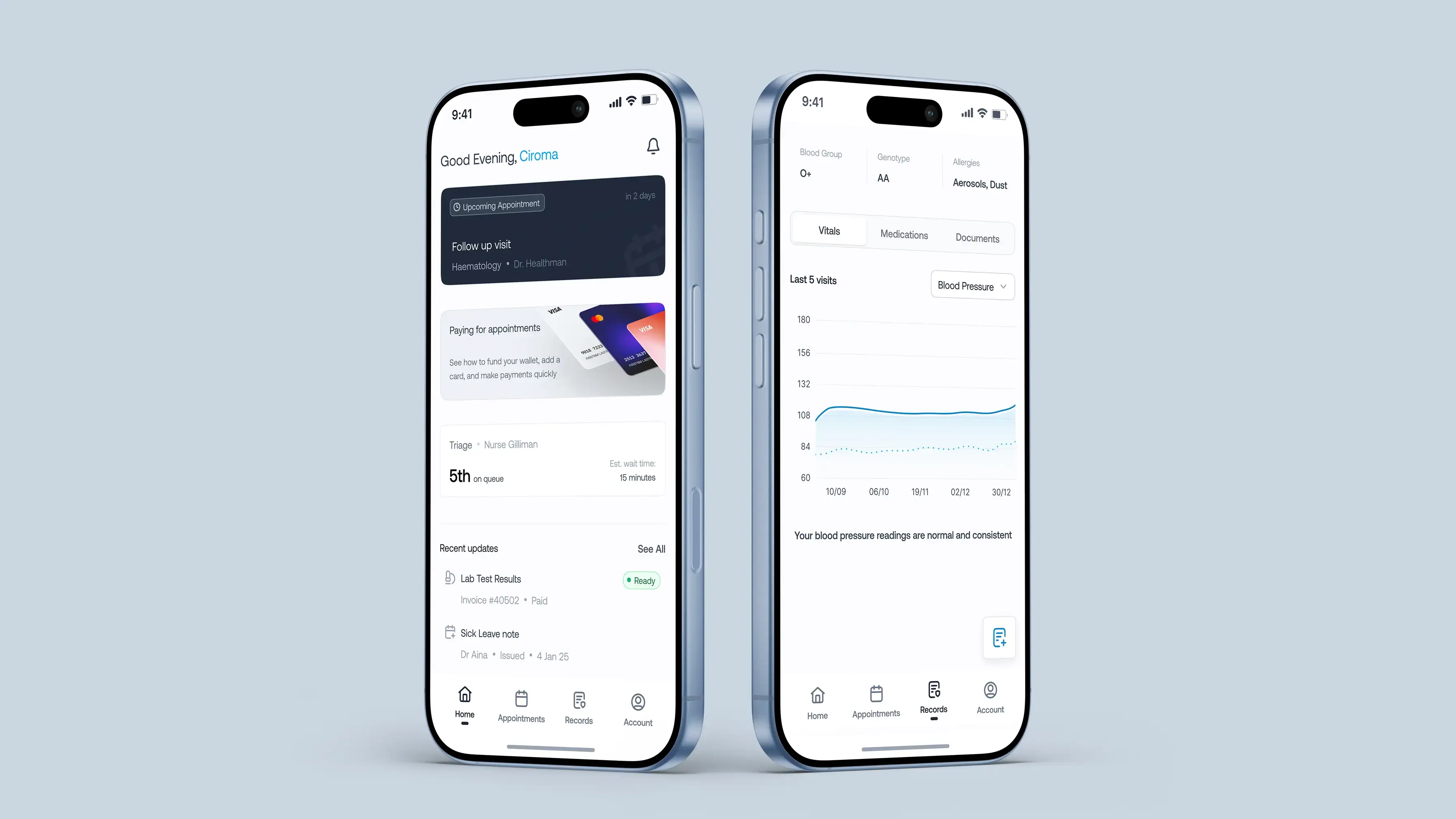
HEALTH TRENDS DASHBOARD TURNED THE APP TO A DAILY HABIT
- Visualized vitals (blood pressure, weight) over time instead of static PDFs
- Transformed records tab from "storage" to "monitoring"
- Impact: Users will open app between visits, doubling retention
PRIVATE NOTIFICATIONS PROTECT PATIENT DATA IN PUBLIC SPACES
- No PHI (Protected Health Information) visible on lock screen
- Auto-lock after few minutes of inactivity
- NDPR compliance signaling built trust
PILLAR II
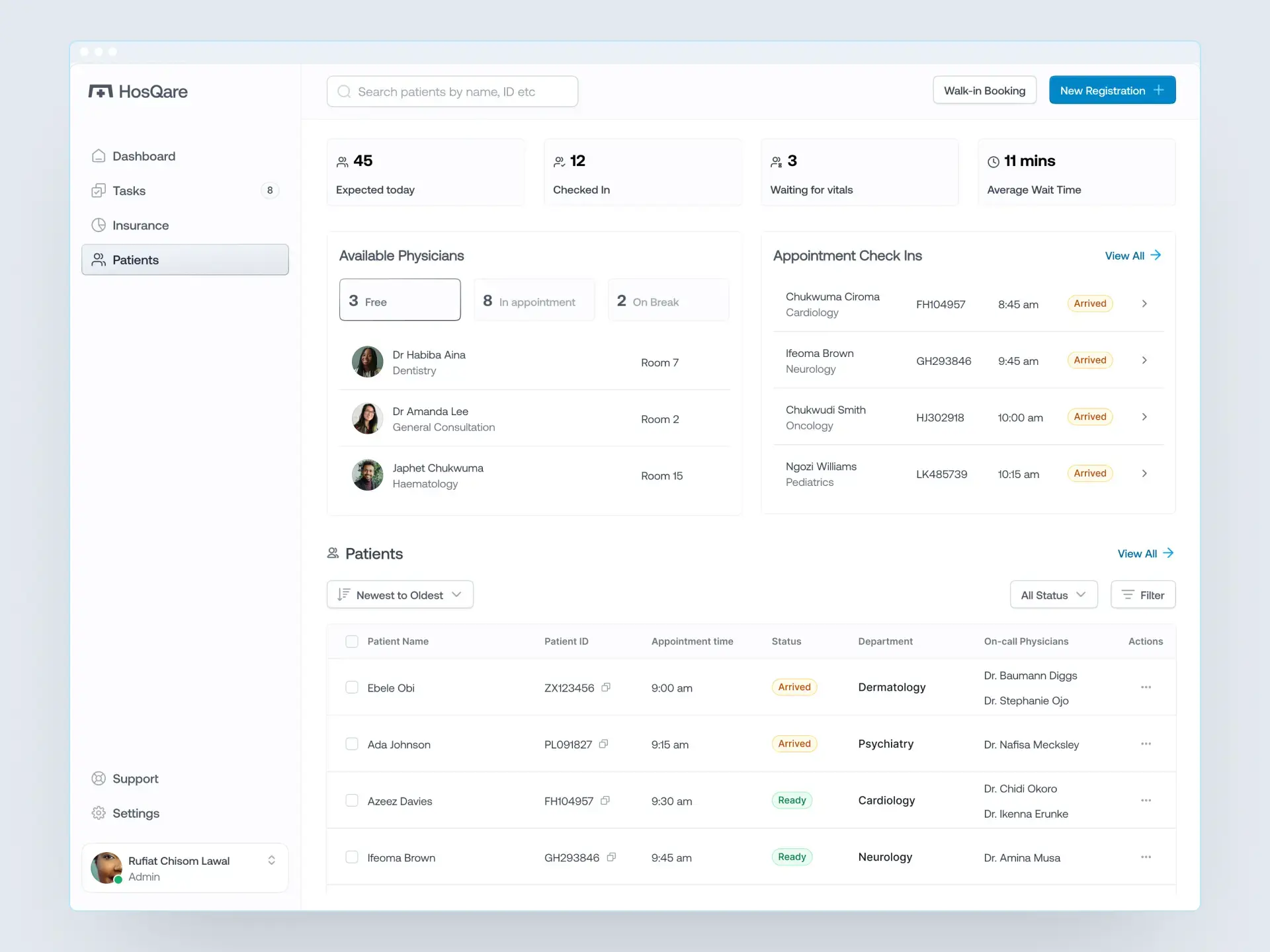
Admin dashboard that receives patient signals and manages queues in real-time
Front-desk staff need real-time queue control, not management reports.
LIVE QUEUE UPDATES THE SECOND PATIENTS CHECK-IN ON MOBILE
- "Arrived" section populates automatically from app check-ins
- No page refreshing or email checking required
- Visual alert draws receptionist's attention to new arrivals
- Eliminated all page navigation—everything happens in slide-out drawers
SINGLE VERIFICATION SCREEN REPLACES 3 SEPARATE CONVERSATIONS
- Side drawer shows: patient identity + payment status + vitals readiness
- Visual QR/pass confirmation from patient's phone
- One-click "Verify & Admit" moves patient to next queue
- Receptionist interaction went drops to a 45-second confirmation
PILLAR III
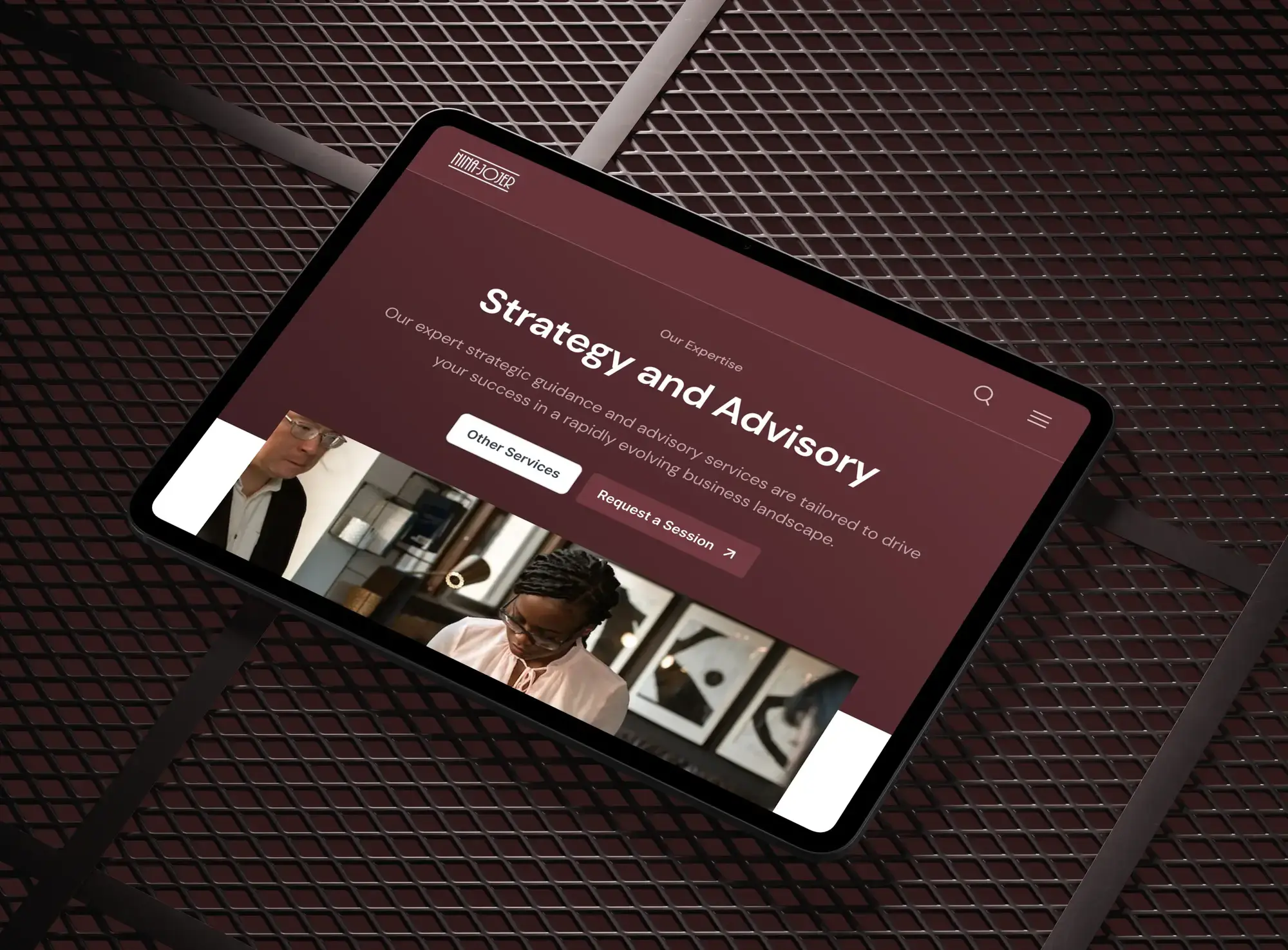
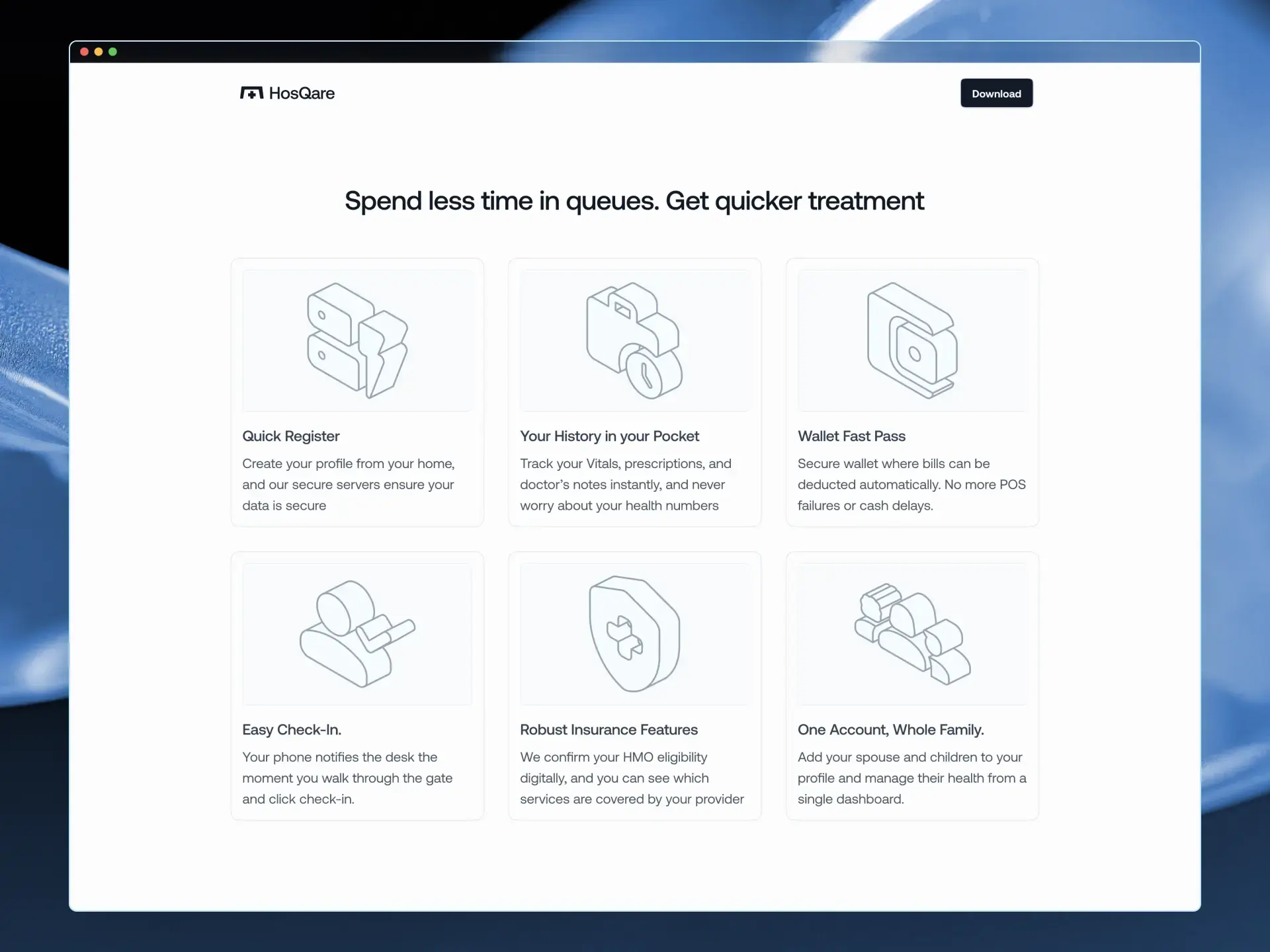
Landing page led with "relief" not features to overcome digital skepticism
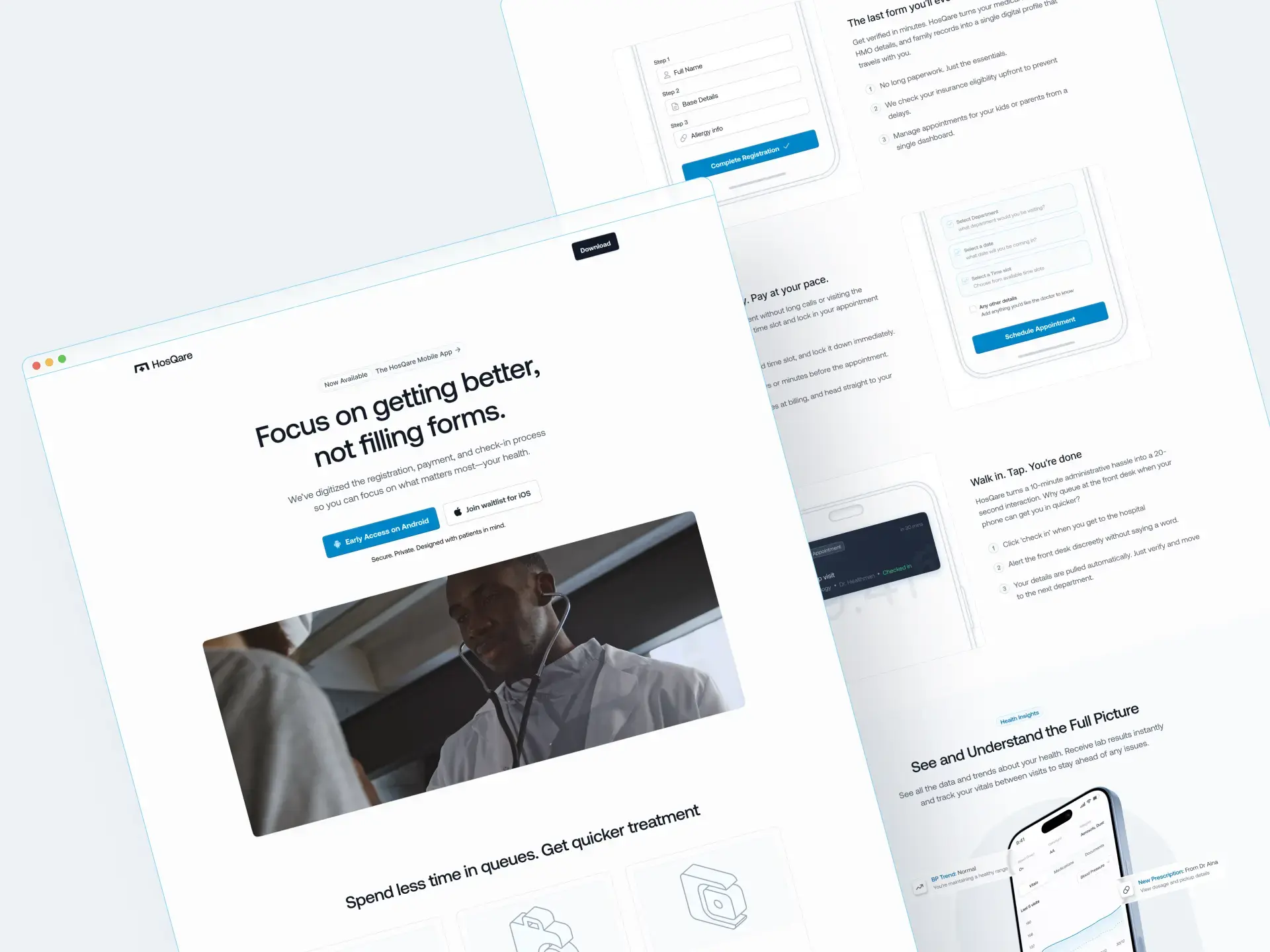
I designed a landing page to convert users who distrust digital health tools, as well as increase trust amongst exiting patients
HERO SECTION ADDRESSED THE EMOTIONAL BARRIER:
"Focus on getting better, not filling forms" sold time savings, not technology
BENEFITS GRID SHOWING SOLUTIONS TO PATIENTS' CONCERNS:
Benefits addressed core issues patients faced e.g. "missing files", "payments" etc.
TRUST SIGNALS ANSWERED UNSPOKEN SECURITY CONCERNS:
Bank-grade encryption, NDPR compliance badges, system status links
CHALLENGES FACED & SOLUTIONS
Overcoming Challenges by Focusing on Target User Needs.
Challenges and constraints are a way of life. Coming up with solutions to these challenges results in a complete, effective solution.
HOSPITAL STAFF WOULDN'T REVEAL DETAILS ABOUT THEIR PROCESSES
Staff hesitated to share internal protocols, fearing exposure of inefficiencies.
Solution:Designed for the experience patients expect, not the process hospitals have. Mapped "ideal state" service flow and built toward that.
PLATFORM PRIVACY RESTRICTIONS BLOCKED THE INITIAL AUTO CHECK-IN CONCEPT
Background geofencing violates App Store and Play Store privacy guidelines.
Solution: Made check-in user-initiated with one-time location verification. Maintained seamless feel within technical constraints.
SMALL RESEARCH SAMPLE RISKED DESIGNING ONLY FOR MY DEMOGRAPHIC
Started with friend/family circle (limited diversity).
Solution:Validated through social listening on Nigerian healthcare forums. Confirmed "missing file" and "payment verification" were universal complaints across regions.
Projected Impact on Patients and Hospital Operations
By properly defining the painpoints faced by both patients and hospital admin staff, the following projections are expected:
EFFICIENCY GAINS:
- Check-in time: 45 min → 10 mins (>75% reduction)
- File retrieval errors: eliminated via digital IDs
- Front-desk query volume: reduced by 60%
REVENUE IMPACT:
- No-show reduction: up to 40%
- Payment friction: minimized via wallet + flexible options
- Patient throughput: increased capacity without adding staff
ENGAGEMENT:
- App retention: 2x via health dashboard
- Session frequency: shifted from illness-only to ongoing monitoring
LEARNINGS & NEXT STEPS
This Was a Pilot, but Here's How I'd Scale It
WHAT I VALIDATED:
- Dual-sided design (patient + admin) addressed systemic issues, not just patient complaints
- Geofencing + digital wallet combination created differentiation from booking-only apps
- Trust-first landing page converted users skeptical of digital health tools
WHAT I'D BUILD NEXT WITH ENGINEERING SUPPORT:
- Currently, patient data lives in HosQare but doctors still use separate systems. Full integration would create seamless handoff from check-in → doctor's notes → prescriptions.
- Use doctor availability patterns to suggest optimal appointment times and auto-notify patients when earlier slots open.
- Let patients use one profile across multiple hospitals (currently designed for single-hospital use).
HOW THE ARCHITECTURE SCALES BEYOND THE PRESENT:
- Any region with analog healthcare systems (Southeast Asia, Latin America, parts of Middle East) that faces identical booking-to-check-in gaps.
- Admin dashboard designed to adapt to different triage processes, payment systems, and staffing models.
- Architecture built privacy-first, ready for GDPR (EU), HIPAA (US), or PDPA (Singapore) requirements.